What Is PCOS?
Polycystic ovary syndrome (PCOS) is one of the most common hormonal conditions affecting women of reproductive age, estimated to affect between 8-13% of women worldwide. Despite its name, you do not need to have cysts on your ovaries to have PCOS ? and many women with PCOS do not have them.
PCOS is diagnosed using the Rotterdam criteria, which requires at least two of the following three features: irregular or absent periods, signs of elevated androgens (male hormones), or polycystic ovaries on ultrasound.
What Causes PCOS?
Insulin Resistance
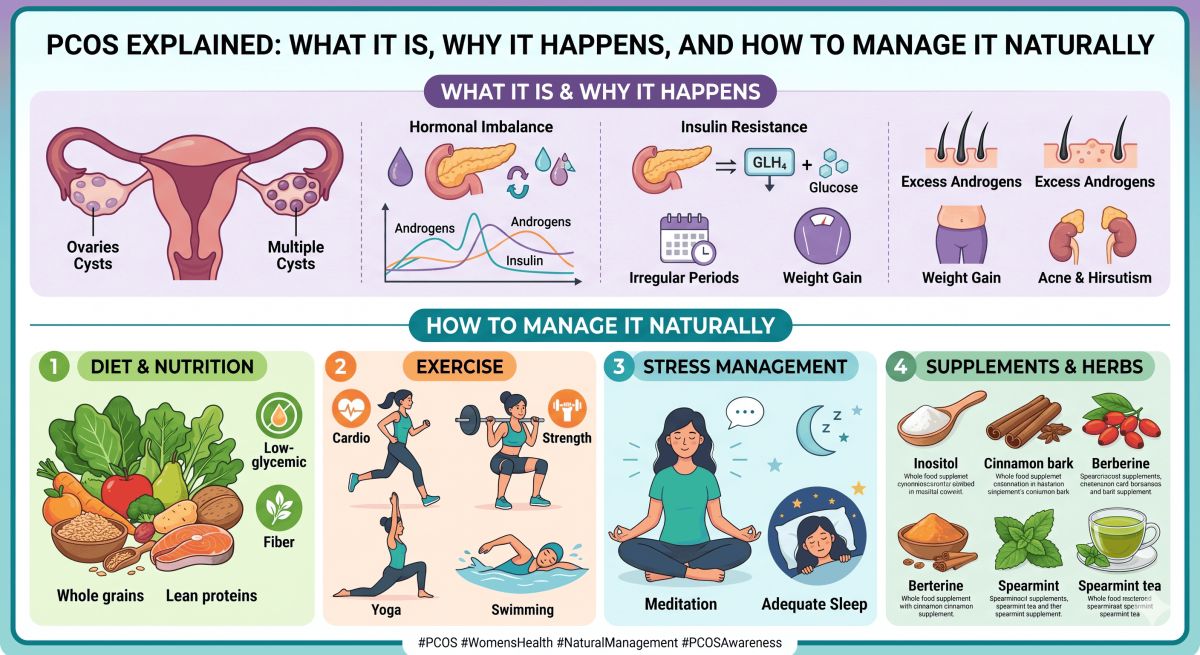
Up to 70% of women with PCOS have insulin resistance ? a condition where cells do not respond normally to insulin. High insulin levels stimulate the ovaries to produce excess androgens (testosterone and DHEA), which interfere with ovulation and cause many of the symptoms associated with PCOS.
Elevated Androgens
High androgen levels are the hallmark of PCOS. Androgens interfere with the normal development of follicles in the ovaries, preventing them from maturing and releasing an egg. This leads to irregular or absent ovulation and causes physical symptoms like acne, excess hair growth, and hair thinning.
Genetic Factors
PCOS runs in families. If your mother, sister, or aunt has PCOS, you are significantly more likely to develop it. Several genes have been associated with PCOS, though no single gene has been identified.
Symptoms of PCOS
- Irregular periods (cycles longer than 35 days, or fewer than 8 periods per year)
- Heavy periods when they do occur
- Difficulty getting pregnant due to irregular ovulation
- Acne, particularly hormonal acne along the jawline
- Excess hair growth on the face, chest, or back
- Hair thinning or loss on the scalp
- Weight gain, particularly around the abdomen
- Mood changes, anxiety, and depression
- Fatigue and difficulty sleeping
Evidence-Based Lifestyle Changes That Help
1. A Low-Glycaemic Diet
Since insulin resistance is central to most PCOS cases, a diet that minimises blood sugar spikes is one of the most effective interventions. This means reducing refined carbohydrates and replacing them with low-GI alternatives like oats, legumes, sweet potato, and whole grains. Research shows that a low-GI diet improves insulin sensitivity, reduces androgen levels, and can help regulate cycles ? even without weight loss.
2. Regular Exercise ? Especially Strength Training
Exercise improves insulin sensitivity independently of weight loss. Both aerobic exercise and resistance training are beneficial, but research suggests that strength training may be particularly effective for PCOS because building muscle mass improves glucose metabolism. Aim for at least 150 minutes of moderate exercise per week, including 2-3 sessions of resistance training.
3. Myo-Inositol Supplementation
Myo-inositol is a naturally occurring compound that improves insulin signalling. Multiple clinical trials have shown that myo-inositol supplementation (typically 4g daily) improves insulin resistance, reduces androgen levels, and helps regulate ovulation in women with PCOS. The 40:1 ratio of myo-inositol to d-chiro-inositol is the most studied formulation.
4. Spearmint Tea
Two cups of spearmint tea daily has been shown in small studies to reduce free testosterone levels in women with PCOS. While the evidence is not yet definitive, it is a low-risk, inexpensive intervention worth trying if you are dealing with hirsutism or acne.
5. Stress Management and Sleep
Chronic stress raises cortisol, which worsens insulin resistance and can further disrupt ovulation. Poor sleep also worsens insulin resistance. Practices like yoga, meditation, and prioritising 7-8 hours of sleep are genuinely therapeutic for PCOS, not just nice-to-haves.
Medical Treatments
Lifestyle changes are the foundation of PCOS management, but medical treatments are often needed alongside them: Metformin for insulin sensitisation, the combined oral contraceptive pill to regulate periods and reduce androgen symptoms, clomiphene or letrozole to induce ovulation for women trying to conceive, and spironolactone for acne and hirsutism.
A Note on Diagnosis
PCOS is often underdiagnosed or misdiagnosed. If you have irregular periods, signs of elevated androgens, or difficulty conceiving, ask your doctor specifically about PCOS. A diagnosis requires blood tests (LH, FSH, testosterone, insulin, thyroid) and often a pelvic ultrasound. Do not accept "your periods are just irregular" without further investigation.