What Is Endometriosis?
Endometriosis is a chronic condition in which tissue similar to the lining of the uterus grows outside the uterus. This tissue can be found on the ovaries, fallopian tubes, the outer surface of the uterus, the bowel, bladder, and in rare cases, even more distant organs.
Like the uterine lining, this tissue responds to hormonal changes during the menstrual cycle ? it thickens, breaks down, and bleeds. But unlike the uterine lining, it has nowhere to go. This causes inflammation, the formation of scar tissue (adhesions), and in the ovaries, cysts filled with old blood called endometriomas.
Endometriosis affects approximately 190 million women and girls worldwide ? about 1 in 10 of reproductive age. It is one of the most common gynaecological conditions, yet it remains chronically underdiagnosed and undertreated.
The Diagnostic Delay Problem
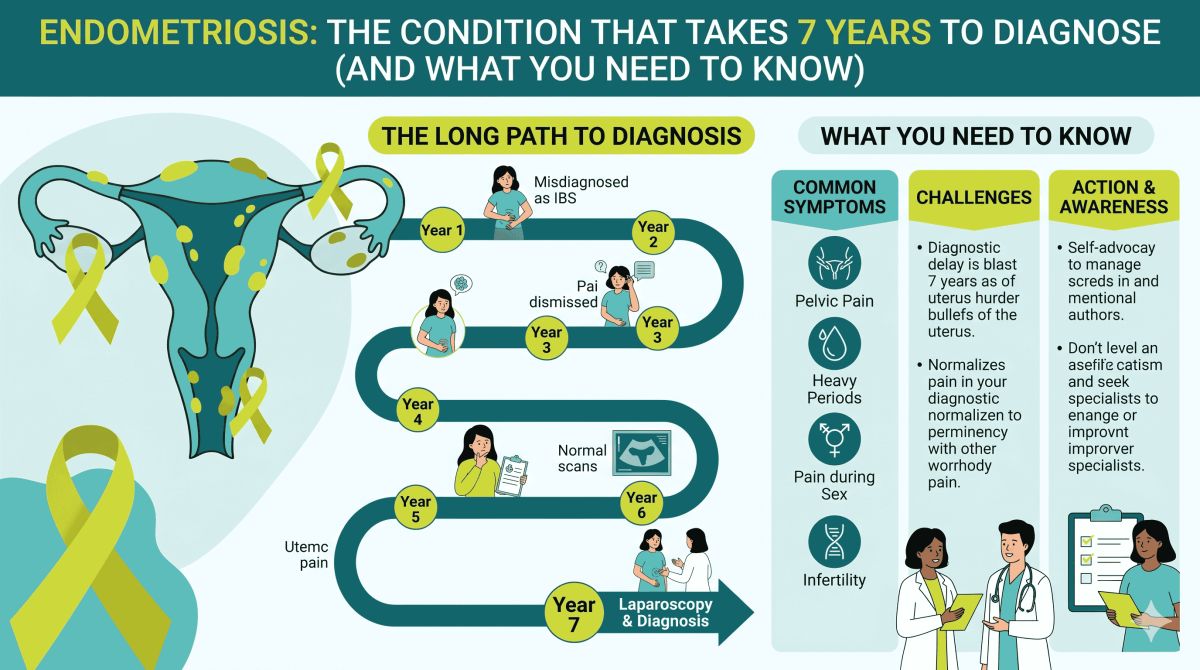
The average time from first symptoms to diagnosis is 7-10 years. This is not because endometriosis is difficult to identify ? it is because symptoms are routinely dismissed as "normal period pain," and because the only definitive diagnostic method (laparoscopic surgery) is invasive.
Many women are told their pain is normal, that they are being dramatic, or that they simply have a low pain threshold. This dismissal is a serious problem. Endometriosis is a progressive condition ? the longer it goes untreated, the more extensive the lesions can become, and the greater the impact on fertility and quality of life.
Symptoms of Endometriosis
Pain
- Dysmenorrhoea: Painful periods, often severe enough to prevent normal activities. The pain typically begins 1-2 days before the period and can last throughout.
- Chronic pelvic pain: Pain that is not limited to the period ? it can occur throughout the month.
- Dyspareunia: Pain during or after sex, particularly with deep penetration.
- Dyschezia: Painful bowel movements, particularly during menstruation.
- Dysuria: Painful urination, particularly during menstruation.
Other Symptoms
- Heavy periods (menorrhagia)
- Irregular bleeding or spotting
- Bloating (sometimes called "endo belly")
- Fatigue, particularly around menstruation
- Difficulty getting pregnant
- Nausea and digestive issues around the period
How Is Endometriosis Diagnosed?
The gold standard for diagnosing endometriosis is laparoscopy ? a minimally invasive surgical procedure where a camera is inserted through a small incision in the abdomen to directly visualise and biopsy endometrial lesions. Ultrasound and MRI can detect endometriomas and deep infiltrating endometriosis, but they cannot rule out the condition.
If you suspect endometriosis, keep a detailed symptom diary tracking pain levels, timing relative to your cycle, and how symptoms affect your daily life. This documentation is invaluable when advocating for a referral to a specialist.
Treatment Options
There is currently no cure for endometriosis, but symptoms can be effectively managed:
- Pain relief: NSAIDs (ibuprofen, naproxen) taken before pain starts are more effective than waiting. Heat therapy also helps.
- Hormonal treatments: The combined pill, progestogen-only pill, hormonal IUS (Mirena), GnRH analogues, and other hormonal therapies can suppress the growth of endometrial tissue and reduce pain.
- Surgery: Laparoscopic excision surgery to remove endometrial lesions is the most effective treatment for pain and fertility outcomes. Excision (cutting out) is superior to ablation (burning) for long-term results.
- Lifestyle support: Anti-inflammatory diet, omega-3 supplementation, stress management, and pelvic physiotherapy can all help manage symptoms alongside medical treatment.
How to Advocate for Yourself
If you have painful periods that interfere with your daily life, you deserve to be taken seriously. Here is how to advocate for yourself effectively: keep a detailed symptom diary; use a pain scale (0-10) to quantify your pain; describe how symptoms affect your ability to work, exercise, and socialise; ask specifically about endometriosis; and if your concerns are dismissed, seek a second opinion or ask for a referral to a gynaecologist who specialises in endometriosis.
You know your body. Severe period pain is not normal, and you deserve answers.