The Food-Hormone Connection
Your hormones are made from the nutrients you eat. Estrogen, progesterone, testosterone, and the other hormones that regulate your cycle are synthesised from cholesterol, amino acids, and micronutrients. When your diet is lacking in key nutrients, hormone production can be disrupted.
Beyond production, your diet also affects how hormones are metabolised and eliminated. The liver processes used hormones and prepares them for excretion. If the liver is overburdened or lacking the nutrients it needs, hormones can recirculate in the body, contributing to estrogen dominance and worsening PMS symptoms.
Key Nutrients for Hormonal Health
Magnesium
Magnesium is involved in over 300 enzymatic reactions in the body, including the production and regulation of hormones. Research shows that magnesium supplementation significantly reduces PMS symptoms including mood changes, bloating, and cramps. It works by relaxing smooth muscle, supporting serotonin production, and regulating blood sugar.
Best food sources: Dark chocolate (70%+ cocoa), pumpkin seeds, almonds, cashews, spinach, black beans, avocado, and whole grains.
Supplement tip: Magnesium glycinate is the best-absorbed form and least likely to cause digestive upset. 300-400mg daily is a typical therapeutic dose.
Omega-3 Fatty Acids
Omega-3 fatty acids are powerful anti-inflammatory compounds that reduce the production of prostaglandins ? the chemicals that cause uterine contractions and period pain. Studies show that omega-3 supplementation can reduce period pain as effectively as ibuprofen in some women.
Best food sources: Oily fish (salmon, mackerel, sardines, herring), walnuts, flaxseeds, chia seeds, and hemp seeds.
Iron
Iron is lost with every period, and women with heavy periods are particularly at risk of iron deficiency. Even mild iron deficiency ? without full anaemia ? can cause fatigue, brain fog, poor concentration, and reduced exercise tolerance. If you feel exhausted around your period, ask your doctor for a full blood count and ferritin test.
Best food sources: Red meat, liver, shellfish, lentils, tofu, tempeh, pumpkin seeds, fortified cereals, and dark leafy greens.
Absorption tip: Pair plant-based iron sources with vitamin C to significantly increase absorption. Avoid tea, coffee, and calcium-rich foods within an hour of iron-rich meals.
Zinc
Zinc is essential for the production of progesterone and supports healthy ovulation. It also has anti-inflammatory and anti-androgenic properties, making it particularly useful for women with PCOS or hormonal acne. Research shows that zinc supplementation can reduce period pain, improve PMS symptoms, and help with acne.
Best food sources: Oysters, beef, pumpkin seeds, chickpeas, lentils, cashews, and hemp seeds.
B Vitamins
B vitamins ? particularly B6, B12, and folate ? are essential for hormone metabolism and neurotransmitter production. Vitamin B6 supports the production of serotonin and dopamine, and studies show it can reduce mood-related PMS symptoms. Folate is critical for women who are pregnant or trying to conceive.
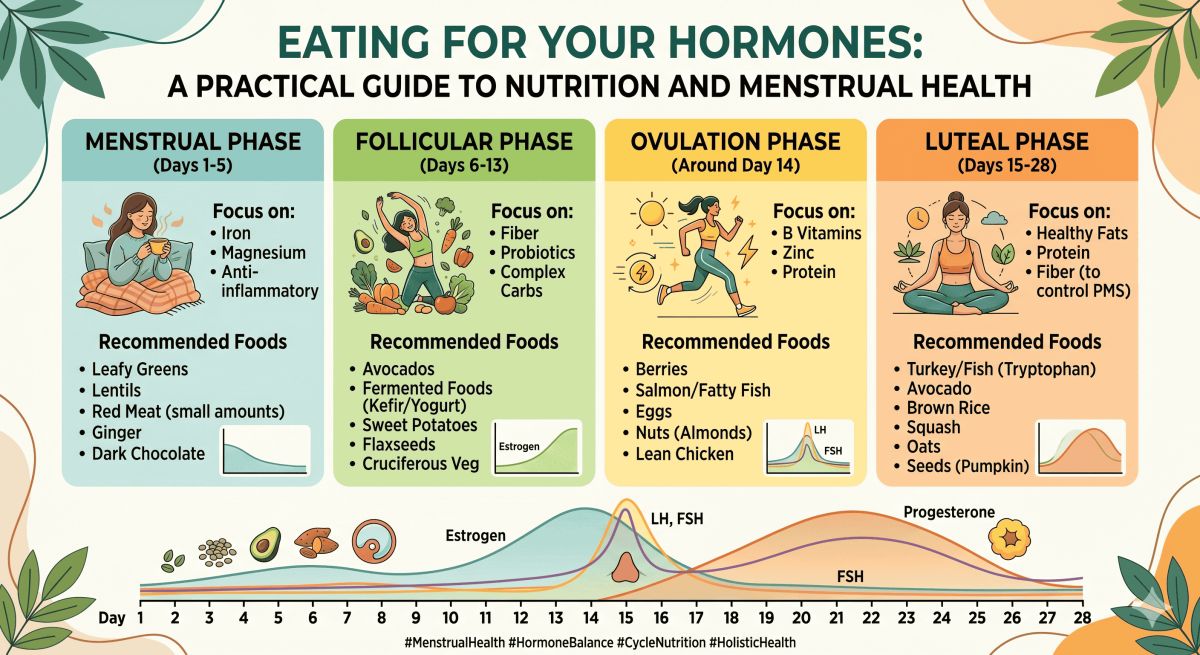
Eating Through Your Cycle
Menstrual Phase (Days 1-5)
Focus on replenishing iron and supporting your body through the physical demands of menstruation. Prioritise iron-rich foods, anti-inflammatory spices (ginger, turmeric), magnesium-rich foods, and warming, easy-to-digest foods. Limit alcohol, caffeine, and salty foods.
Follicular Phase (Days 6-13)
Rising estrogen supports good energy and metabolism. Prioritise cruciferous vegetables (broccoli, cauliflower, Brussels sprouts, kale) which contain DIM that supports healthy estrogen metabolism. Fermented foods support gut health, which is important for estrogen clearance.
Ovulatory Phase (Days 14-16)
Support egg quality and the LH surge with antioxidant-rich foods. Prioritise zinc-rich foods (pumpkin seeds, chickpeas), antioxidant-rich foods (berries, colourful vegetables), and foods high in vitamin C.
Luteal Phase (Days 17-28)
Progesterone rises and then falls, often causing cravings, bloating, and mood changes. Prioritise complex carbohydrates (oats, sweet potato, brown rice, quinoa) which stabilise blood sugar and support serotonin. Limit sugar, refined carbohydrates, and alcohol.
A Practical Starting Point
You do not need to overhaul your entire diet overnight. Start with these three changes and give them 2-3 cycles to make a difference: add a magnesium supplement (300-400mg glycinate form) taken before bed; increase omega-3 intake through oily fish 2-3 times per week or a quality supplement; and reduce sugar and refined carbohydrates, particularly in the week before your period.